

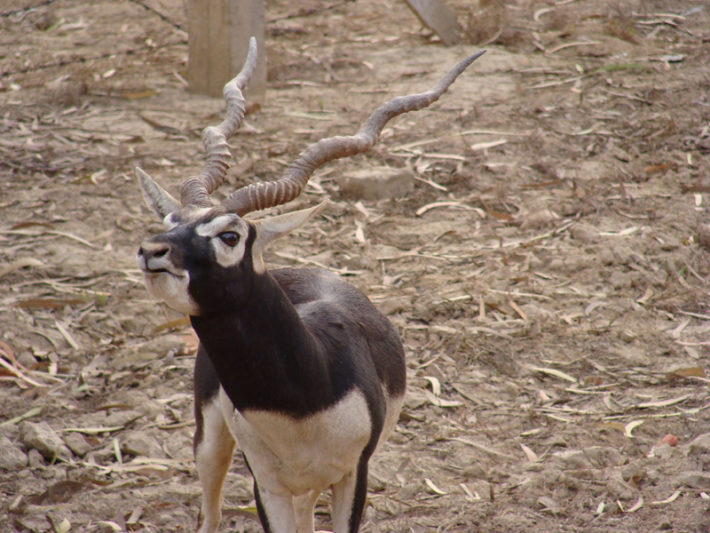
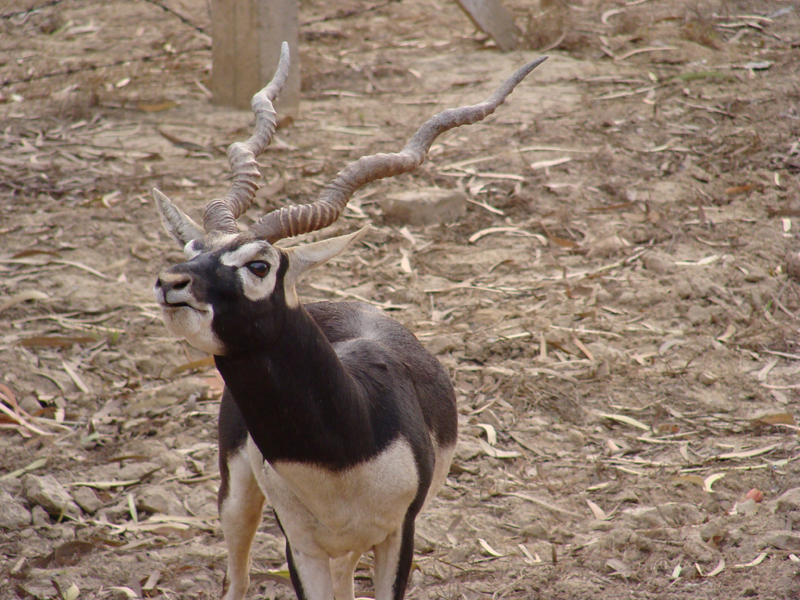
As I lined up at the second hole, the fawn strolled nonchalantly across the fairway and ambled leisurely across the greens. Here in the forests and groves around which the golf course of the army cantonment was created, chinkaras, blackbuck, peacocks and even the occasional fox were common sights. At last count, there were 51 chinkaras and blackbuck that had made this course a home— in fact; they provided one of its most striking attractions. Yet, the deer remained usually hidden in the shadows of the emerald forest on the fringes of the course. None ventured close to the humans who had carved their recreational retreat around their home. Man and deer lived in harmony, each respecting the others’ private space, each acknowledging each other’s peaceful co-existence.
Yet this fawn was different. She came unabashedly closer, and was almost at home with mankind. Humans held no fears for her, in fact they were part of her herd, her very family. As I saw her grazing peacefully around the flowerbeds of the 19th hole, the ubiquitous watering hole of all golfers, I learnt her story and discovered the secret of her unusual attachment to man, and her tragic exclusion from the rest of the herd.
She was barely a month old when she wandered out of the forest and crossed the dividing line of open fairway towards human habitation. Here lay danger in the misplaced concern of one of the sentries who picked her up, and stroked her lightly and gently. The results were catastrophic. The harmless touch of the sentry’s hands marked her for life, and left an indelible imprint of his scent on her down, a scent which she carried as she skittered back into the forest where her family watched and waited in the shadows.
The scent marked her as alien, an outsider. Shunned by the herd, she was butted and banished, perhaps saved a cruel death at the horns and hooves of her own herd, only by a panicked flight back into the sentry quarters, where she was picked up, carried indoors, nursed and slowly nurtured into growth.
The fawn grew fast and strong. For the sentries who nurtured her, feeding her first from milk bottles, then with leaves and shoots, she became a companion, —- a playful solace to assuage the loneliness of all soldiers. Within the golf course itself, she fast acquired the status of a mascot. She ambled across the lawns and tees, and nibbled on the greens and fairways often within touching distance. She often spoilt the well-manicured greens by skittering madly across them- a small privilege that was never begrudged. Her home became the greens and fairways of the course and the forest remained alien distant.
The summer came, so did the rains. A glorious autumn was followed by a harsh dry winter, which saw her huddled within the sentries’ quarters, an old blanket for warmth and humankind for company. The herd huddled close to each other within the forest. They slept, fed, fought off natural enemies, lived and grew in their own silent society.
The long winter passed and the herd once more moved out of their groves, often into the greens and fairways of the course. The fawn grew strong and solitary, grazing on the edges of the greens, resting in the sand traps and bunkers. Ever so often she approached the herd with uncertain steps, only to be rudely butted out, or silently ignored. She continued her solitary grazing on the fringes of the herd, forever on the periphery, forever trying to enter the closed protective ring that the herd formed instinctively around themselves.
The closed society of the herd brooked no outsider, and the fawn seemed destined to remain one. She shunned mankind now, perhaps with the awareness of her own being and studiously avoided human touch. As the mating season came she watched the fierce clashes between the blackbuck as they sought to assert supremacy over the herd. She ventured closer to the herd, mostly ignored, but at times permitted to graze alongside. Yet the sacred sanctum of the forest remained barred to her.
Perhaps her days and nights were lonelier now. She rarely approached human habitation, spending her nights in the warm sands of the bunkers around the greens. She would not be visible for days on end and the course seemed to lose a great deal of its character by her long absences. Then she disappeared completely.
We saw her again three months later, in early autumn. This time she was not alone. Two young fawns teetered on unsteady, spindly legs around her. A male buck strutted alongside, positioning himself strategically to a side where he could watch for the faintest sign of danger. She remained in the shadows of the forest for a while, then tentatively approached her favorite spots at the fringes of the greens, and nibbled at the edges. As we approached for a closer look, she turned around, protectively nestling her young, and herded them past the sand traps and bunkers, into the cool, emerald green of the forest, in which she had regained her rightful home.
Ragini Singh